
The Indian Protein Paradox: Why Most Indians Don't Get Enough
Key Takeaways
- Surveys estimate roughly 70% of Indians do not meet their daily protein requirement, and over 90% are unaware of how much protein they need
- The ICMR-NIN recommends 0.83g of protein per kg of body weight daily — but closer to 1g/kg for people on cereal-heavy diets, which describes most Indians
- Rice and wheat supply 60-75% of the average Indian's protein — a lower-quality protein missing key amino acids
- Protein is the most filling nutrient: too little drives hunger, muscle loss and a slower metabolism — a hidden cause of weight gain
- Protein deficiency in India is not a poverty problem — even higher-income households routinely fall short
The Protein Paradox: Hungry in a Land of Plenty
India grows more pulses than any country on earth, keeps the world's largest dairy herd, and sits at the centre of a vegetarian food culture built around dal, curd and legumes. Yet most Indians do not eat enough protein. This contradiction — abundant protein-rich food on one side, widespread deficiency on the other — is what nutrition researchers call the protein paradox.
The scale of the gap is striking. A widely cited 2017 survey by the Indian Market Research Bureau found that roughly 70% of Indians did not meet their recommended daily protein intake, and more than 90% were unaware of how much protein they actually needed. Later research backed this up: a study of households across India's semi-arid regions, conducted by ICRISAT and IFPRI, found that more than two-thirds consumed less protein than recommended — despite having ready access to pulses, dairy and other protein sources.
Perhaps the most surprising finding is who is affected. Protein deficiency in India is not confined to low-income families. The same research found that wealthier households — people who can easily afford eggs, paneer and a varied diet — also routinely fell short. This is not primarily a problem of poverty or food availability. It is a problem of habit, awareness and the shape of the Indian plate.
How Much Protein Do Indians Actually Need?
The Indian Council of Medical Research, through its National Institute of Nutrition (ICMR-NIN), sets the official benchmark. In its 2020 guidelines, the recommended dietary allowance for protein is 0.83 grams per kilogram of body weight per day for a healthy adult.
For a 60 kg adult, that works out to roughly 50 grams of protein a day; for a 75 kg adult, about 62 grams. These are maintenance figures — the amount needed to avoid deficiency, not the amount that is optimal for muscle, metabolism or weight management.
There is an important caveat for Indians specifically. The ICMR notes that for people eating a cereal-based diet with lower-quality protein — which describes the majority of Indian households — the requirement rises closer to 1 gram per kilogram per day. In other words, the very diet most Indians eat increases the amount of protein they need, while making it harder to get.
Most Indians fall short on both counts: they eat less protein than the baseline recommendation, and the protein they do eat is of a quality that demands a higher intake to begin with.
Why Do Indian Diets Fall Short on Protein?
The Indian plate is built around carbohydrates. Rice and wheat are not just side dishes — they are the centre of nearly every meal. Research on Indian diets shows that cereals alone supply 60-75% of the average person's daily protein.
This matters because cereal protein is incomplete. Rice and wheat are low in lysine, an essential amino acid the body cannot make itself. Protein quality — not just quantity — determines how much your body can actually use. A plate that is 70% rice may look filling, but it delivers a thin, incomplete stream of protein.
Several other factors compound the gap:
- Awareness — Most people have never been told how much protein they need, or that roti and rice contribute little. Protein is invisible in the way Indians plan meals.
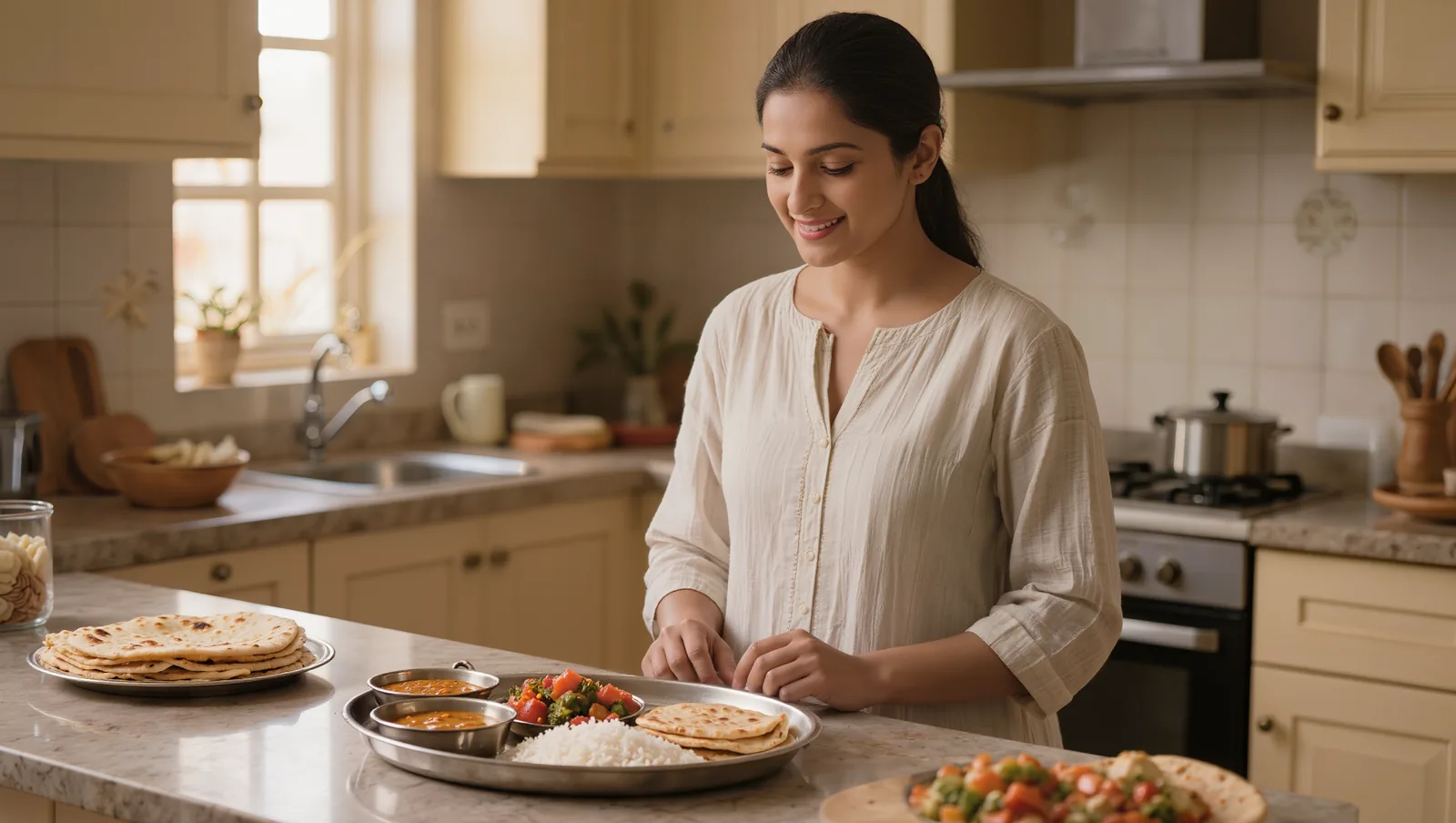
- Plate composition — A typical thali is carbohydrate-forward: a large helping of rice or several rotis, a small katori of dal and a vegetable. The protein portion is the smallest part of the meal.
- Breakfast — The Indian breakfast — poha, idli, paratha, bread, upma — is almost entirely carbohydrate. The first meal of the day often contains very little protein.
- Cultural preference and cost — Even when eggs, dairy or pulses are affordable, taste, habit and the perception of protein as a non-essential extra keep portions small.
None of this means a vegetarian diet cannot deliver enough protein. It absolutely can. But it does not happen by accident — it has to be planned.
What Does Protein Deficiency Do to Your Weight?
Protein is the single most important nutrient for weight control, and falling short quietly works against you in three ways.
First, protein is the most filling nutrient. Gram for gram, protein satisfies hunger more effectively than carbohydrate or fat. There is a well-studied idea in nutrition science called the protein leverage hypothesis: the body keeps driving appetite until its protein need is met. If your meals are low in protein, you tend to keep eating — and what you reach for is usually more carbohydrate and fat. A low-protein diet, in effect, makes you overeat everything else.
Second, too little protein costs you muscle. Protein is the raw material the body uses to maintain muscle tissue. When intake is chronically low — especially alongside dieting — the body breaks down muscle. Less muscle means a lower resting metabolic rate, because muscle burns more energy at rest than fat does. This is one of the quiet reasons weight returns after a diet. We explain this metabolic trap in detail in our guide to why diets fail.
Third, protein steadies blood sugar. A meal that is mostly refined carbohydrate causes a sharp rise and fall in blood sugar, which triggers hunger again within a couple of hours. Adding protein slows digestion and flattens that curve, keeping you fuller for longer.
The result is a frustrating cycle familiar to many Indians trying to lose weight: eating less, still feeling hungry, losing muscle rather than fat, and watching the scale refuse to move.
What Are the Signs You Are Not Getting Enough Protein?
Protein deficiency is rarely dramatic. It tends to show up as a collection of small, easily ignored signals:
- Constant hunger and cravings, especially for carbohydrates and sweet foods, even after a full meal
- Loss of muscle tone and strength — feeling soft or weaker despite a stable or rising body weight
- The skinny-fat pattern — a normal weight on the scale but low muscle and excess fat, particularly around the abdomen
- Thinning hair, brittle nails and dull skin, as the body rations protein away from non-essential tissues
- Slow recovery from illness, exercise or injury, and frequent minor infections
- Persistent tiredness and difficulty building or keeping muscle even with exercise
Any one of these has many possible causes. But together, in someone eating a typical carbohydrate-heavy Indian diet, they point strongly towards an unmet protein need.
How Do You Fix the Protein Gap on an Indian Plate?
Closing the protein gap does not require protein powders, an overhaul of your kitchen, or giving up vegetarian eating. It requires rebalancing the plate you already eat.
- Make protein the anchor of every meal. Before you plan the rice or roti, decide the protein: a generous katori of dal, a bowl of rajma or chana, paneer, eggs, curd or soya. Aim for a visible, substantial portion — not a token spoonful.
- Fix breakfast first. It is usually the weakest meal. Add eggs, a bowl of curd, a glass of milk, besan chilla, moong dal chilla or sprouts to a carbohydrate breakfast.
- Combine cereals with pulses. Rice with dal, roti with rajma, idli with sambar — pairing grains and legumes creates a more complete amino acid profile than either alone. Traditional Indian combinations already do this; the trick is to increase the pulse share.
- Use curd, milk and paneer deliberately. Dairy is among the highest-quality protein available to Indian vegetarians. A bowl of curd with lunch or a glass of milk is an easy, familiar addition.
- Keep protein-rich snacks on hand — roasted chana, peanuts, sprouts, boiled eggs or a handful of paneer cubes — in place of biscuits and namkeen.
- Spread protein across the day. The body uses protein best in moderate amounts at each meal rather than one large serving. A little at breakfast, lunch and dinner beats a single protein-heavy meal.
For a fuller picture of how to structure meals around dal, roti, rice and sabzi in the right proportions, see our doctor-approved Indian diet plan.
When Protein Alone Is Not the Whole Answer
Fixing your protein intake is one of the highest-value changes you can make — but it is one piece of a larger picture. If you are carrying significant excess weight, struggling with stubborn fat despite genuine effort, or dealing with insulin resistance, PCOS or a thyroid problem, nutrition alone may not be enough.
Weight that will not shift despite a better diet is a signal worth taking seriously. It often reflects underlying metabolic or hormonal factors that need to be assessed and addressed directly — something a doctor who specialises in weight management can help untangle.
Assess Your Nutrition and Metabolic Health on NuvaHealth
At NuvaHealth, we connect you with licensed Indian doctors who assess your diet, body composition and metabolic health — then build a personalised, culturally appropriate plan that works with the way you actually eat.
No fad diets, no imported meal plans that ignore dal and roti. Just an evidence-based assessment from the comfort of your home, and clear guidance on what to change first.
Start your assessment on NuvaHealth today and find out whether protein — or something more — is holding your progress back.
Frequently Asked Questions
How much protein should an Indian adult eat per day?+
The ICMR-NIN recommends 0.83 grams of protein per kilogram of body weight daily — about 50 grams for a 60 kg adult. For people on a cereal-heavy diet, which describes most Indians, the requirement rises closer to 1 gram per kilogram. Active people and those losing weight often benefit from more.
Can vegetarians in India get enough protein?+
Yes. A vegetarian diet built around generous portions of dal, rajma, chana, paneer, curd, milk, soya, sprouts and eggs can comfortably meet protein needs. The key is making protein a deliberate, substantial part of every meal rather than a small side portion.
Does eating more protein help with weight loss?+
Yes, in several ways. Protein is the most filling nutrient, so it reduces overall hunger and cravings. It also protects muscle during weight loss, which keeps your metabolic rate higher. Diets higher in protein consistently show better fat loss and easier weight maintenance.
What are the warning signs of protein deficiency?+
Common signs include constant hunger and carbohydrate cravings, loss of muscle tone and strength, thinning hair and brittle nails, slow recovery from exercise or illness, and a skinny-fat body composition — a normal weight but low muscle and excess belly fat.
Do I need protein powder to meet my requirement?+
No. Most people can meet their protein needs through everyday foods — dal, dairy, eggs, pulses and soya. Protein powder is a convenience, not a necessity. It can help people with high requirements or a limited appetite, but whole foods should come first.
Ready to start your journey?
Connect with a licensed doctor who specialises in weight management. Private video consultation from home.
Start Your Assessment